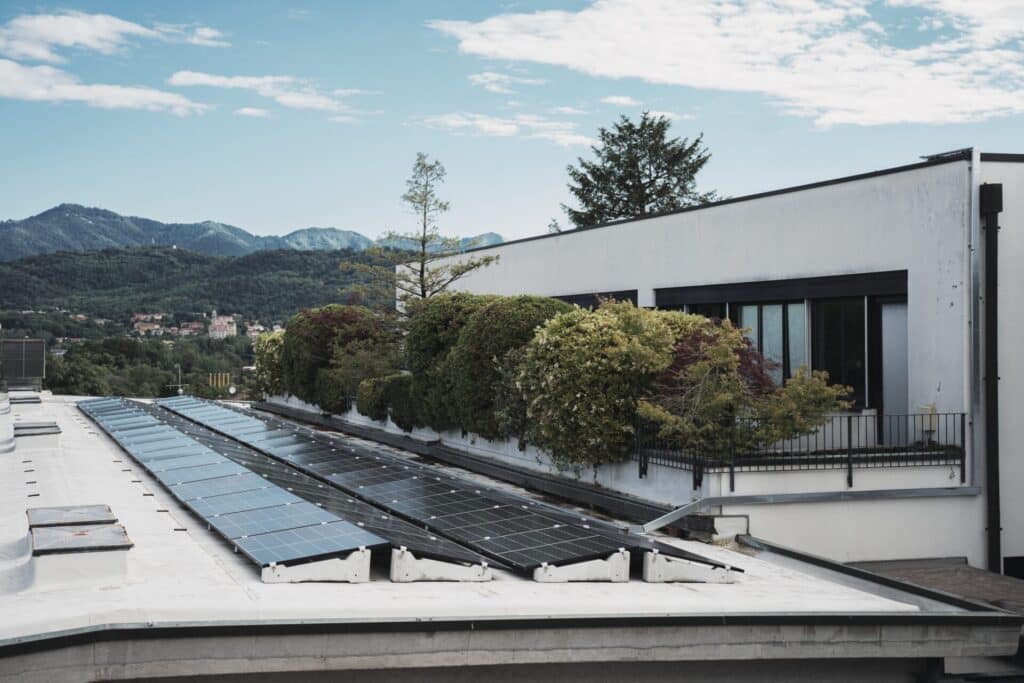
Sustainability has been one of Clerici Tessuto’s strategic pillars for years, integrating environmental responsibility and industrial innovation throughout the entire production process. In 2024, that path of continuous improvement gained further momentum with a major milestone on the energy front.
On July 15, 2024, the company’s new photovoltaic (PV) system became operational. In its first five months, it enabled the self-production of 87.9 MWh of clean electricity, helping to avoid 22.5 tonnes of CO₂e emissions.
Most of the energy produced was used to power the manufacturing site: 68.4 MWh, equal to around 3% of total energy needs. The remaining 19.5 MWh was fed into the grid and sold to the energy operator—maximizing the value of surplus generation while supporting the wider energy system.
Energy transition, however, does not end with on-site generation. To further accelerate decarbonization, Clerici Tessuto covered 97% of the electricity demand not supplied by the PV system through the purchase of renewable electricity backed by Guarantees of Origin (GO).
Thanks to this approach, the company eliminated electricity consumption from non-renewable sources, in line with the targets set out in its 2024 Sustainability Report. The result is a robust, verifiable energy model that combines two complementary levers: self-production and certified renewable procurement.
The benefits become even clearer in 2025, the first year in which the PV system will operate for a full 12 months. Average annual production is estimated at around 220 MWh, more than double the 2024 figure (88 MWh), thanks to a longer operating period that includes the sunniest months.
At the same time, the company confirms its commitment to continue purchasing electricity with Guarantees of Origin, further consolidating a virtuous model based on integration between on-site generation and certified renewable energy.
Clerici Tessuto’s sustainability efforts extend beyond energy. In 2024, the company strengthened its responsible approach to water resources. Overall water consumption decreased by 19% compared to the previous year, with an additional reduction of around 6% in terms of cubic meters of water per tonne of product. Usage patterns remain broadly consistent with 2023, with preparation and finishing continuing to account for the largest share.
“Installing our photovoltaic system is a concrete step within a sustainability strategy we strongly believe in,” says Matteo Rossini, CEO of Clerici Tessuto. “Reducing the environmental impact of our activities means investing in structural solutions—ones that create value over time and guide the company towards an increasingly responsible production model.”
With these results, Clerici Tessuto confirms a clear long-term direction: environmental responsibility, industrial innovation, and sustainable value creation across the textile supply chain—through measurable actions and investments designed to last.